

Growing Turmeric and Ginger in Missouri Clay: What 2 Years of SARE Research Taught Us
Picture a 900-square-foot strip of red Ozark clay behind our farm stop in Cassville. Half of it is covered in cedar mulch, half in chipped wood from a local tree service. Drip tape runs down every row. By October, we were on our knees pulling up 93 pounds of turmeric and 54 pounds of ginger out of ground most people would call too heavy for tropical roots.
That plot was our USDA SARE Farmer/Rancher research project. For two seasons we tested whether a small Missouri farm could grow turmeric and ginger, keep weeds and pests in check with mulch, and turn the harvest into something worth selling. Here's what happened, what went wrong, and what we'd tell you to do on your own land.
The short answer
Yes, you can grow turmeric and ginger in southwest Missouri. Start the rhizomes indoors in late winter, plant out after your last frost into compost-rich soil with drip irrigation and about 3 inches of mulch, hand-weed through the first season, and dig before the first hard frost. On our 900 sq ft plot, turmeric went from about 38 lb in year one to 93 lb in year two.
In this article
What changed in year two
Same plot, same drip lines, same split mulch layout. The difference was experience: better sprouting, better timing and a lot more weeding. The roots answered.
| Crop | Year 1 (2025) | Year 2 (2026) | Change |
|---|---|---|---|
| Turmeric | ~38 lb | 93 lb | +145% |
| Ginger | ~11 lb | 54 lb | +391% |
| Lemongrass | — | 74+ lb (3 cuttings) | new |
Rosemary was supposed to be part of the mix. Cold, direct winter wind killed every plant. We swapped that spot to annual lemongrass, cut it three times and used it in our Golden Calm tea. Sometimes the "failure" row becomes your best crop.
The clay soil lesson
Here's the part I wish someone had told me. Our total harvest was up, but per plant it was down. The turmeric roots had a hard time pushing through our dense clay, so each plant gave us about a pound and a quarter instead of the pound and a half we got the year before. The fix is simple: work a heavy layer of compost into the bed before planting, and aim for loose, well-drained soil with a pH around 5.5–6.5. That's exactly what we're doing to the plot next.
Cedar vs. tree-service mulch
Held moisture well and broke down slowly. Weeds stayed low where we also hand-weeded. Most of the leaf damage showed up in these rows.
Low-cost and easy to get locally. Broke down faster, feeding the soil. Less leaf damage than the cedar rows.
The surprise: mulch alone did not stop weeds. In the section we didn't hand-weed, grass seed came right up through both mulches and choked the turmeric and ginger. The tougher crops, lavender and lemongrass, shrugged it off. Mulch plus regular hand-weeding is what actually worked.
The holes in the leaves
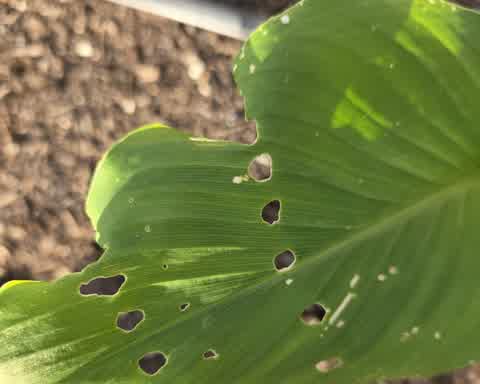
In late June we found ragged holes in the turmeric leaves. No slime trails, so not slugs. It looked like a chewing insect, and it was concentrated in the cedar rows. We also turned up grubs when digging, but the roots didn't show notable damage. Our advice: walk the rows weekly, photograph anything odd, and don't panic over a few holes. The plants kept growing and still made a strong harvest.
From roots to tea
From our farm · Case study
The real value came after harvest. We dried turmeric, ginger and lemongrass into five herbal tea blends: Golden Calm, Sunset on the Farm, Ozark Serenity, Women's Wellness and our Immunity Blend. Tea sales went from $155 in 2025 to $1,777 in 2026 on our own store, plus another $591 through consignment at Ozarks Farm Stop, the Roaring River State Park store and Amazon. A pound of roots is worth far more in a tea pouch than in a bin.
How to start your own plot
- Test your soil and pick a sheltered spot near water.
- Order seed rhizomes in winter. Let them rest a week at 50–60°F. Never refrigerate.
- Soak and sprout in flats at 72–78°F for 8–10 weeks. A heat mat helps.
- Load the bed with compost, especially on clay.
- Lay drip tape, then about 3 inches of mulch.
- Plant out a week after your last frost.
- Hand-weed every 1–2 weeks and scout for pests weekly.
- Dig before a hard frost, weigh every row and save your best pieces as next year's seed.
Get the free Turmeric & Ginger Playbook
Our 12-page grower playbook: the month-by-month calendar, a bed cross-section, the weed and pest plan, the cedar vs. tree-service mulch comparison, harvest tips, income math and a printable checklist.
Send Me the Free PlaybookKey takeaways
- Turmeric and ginger can thrive on a small Ozark plot with a head start indoors.
- Clay soil limits root size; compost is the fix.
- Mulch helps, but hand-weeding is what keeps grass out.
- Drying roots into tea multiplies what a small plot earns.
Frequently asked questions
Can turmeric grow in Missouri?
Yes, as an annual. Start rhizomes indoors in late winter, plant out after the last frost and dig before a hard freeze.
How much turmeric can a small plot produce?
Our 900 sq ft plot produced about 38 lb in year one and 93 lb in year two.
Is cedar mulch good for turmeric?
It held moisture and slowed weeds where we also hand-weeded, but most of our leaf-chewing damage showed up in the cedar rows. Mixed tree-service mulch was cheaper and broke down faster.
Does mulch stop weeds on its own?
Not in our trial. Grass came through both mulches where we skipped hand-weeding.
What do you do with the harvest?
We sell some fresh and dry the rest into herbal tea blends, which earn far more per pound.
This material is based upon work supported by the National Institute of Food and Agriculture, U.S. Department of Agriculture, through the North Central Region SARE program under project number FNC25-1454. USDA is an equal opportunity employer and service provider. Any opinions, findings, conclusions or recommendations expressed here are those of the author and should not be construed to represent any official USDA or U.S. Government determination or policy.


